Fraud prevention
Revolut is one of the world's leading fintech platforms, with over 50 million customers globally.
2024
Role: Lead UX Writer
The problem
In 2024, Revolut saw a significant rise in fraud cases. Product teams were tasked with reviewing existing security flows end-to-end to ensure they were working as hard as possible, both to stop fraudsters and to protect genuine customers caught in the middle.
The core tension in this project was that the same flow had to serve two opposite users – firstly, real customers whose accounts had been restricted after being flagged as a security risk — people who were worried, confused and needed reassurance. Secondly, it had to deter fraudsters who may be in possession of someone else's device, actively trying to pass identity verification.
Writing for both simultaneously meant every content decision was a balancing act: clear and reassuring enough not to alarm innocent users, while robust and specific enough to deter bad actors.
The hypothesis
If the end-to-end flow was rewritten to prioritise clarity and reassurance for genuine customers, while tightening the language and friction points that fraudsters could exploit, Revolut could reduce fraud cases.
My role
Lead UX writer across the full verification flow and corresponding email communications.
What I changed and why
In-app flow
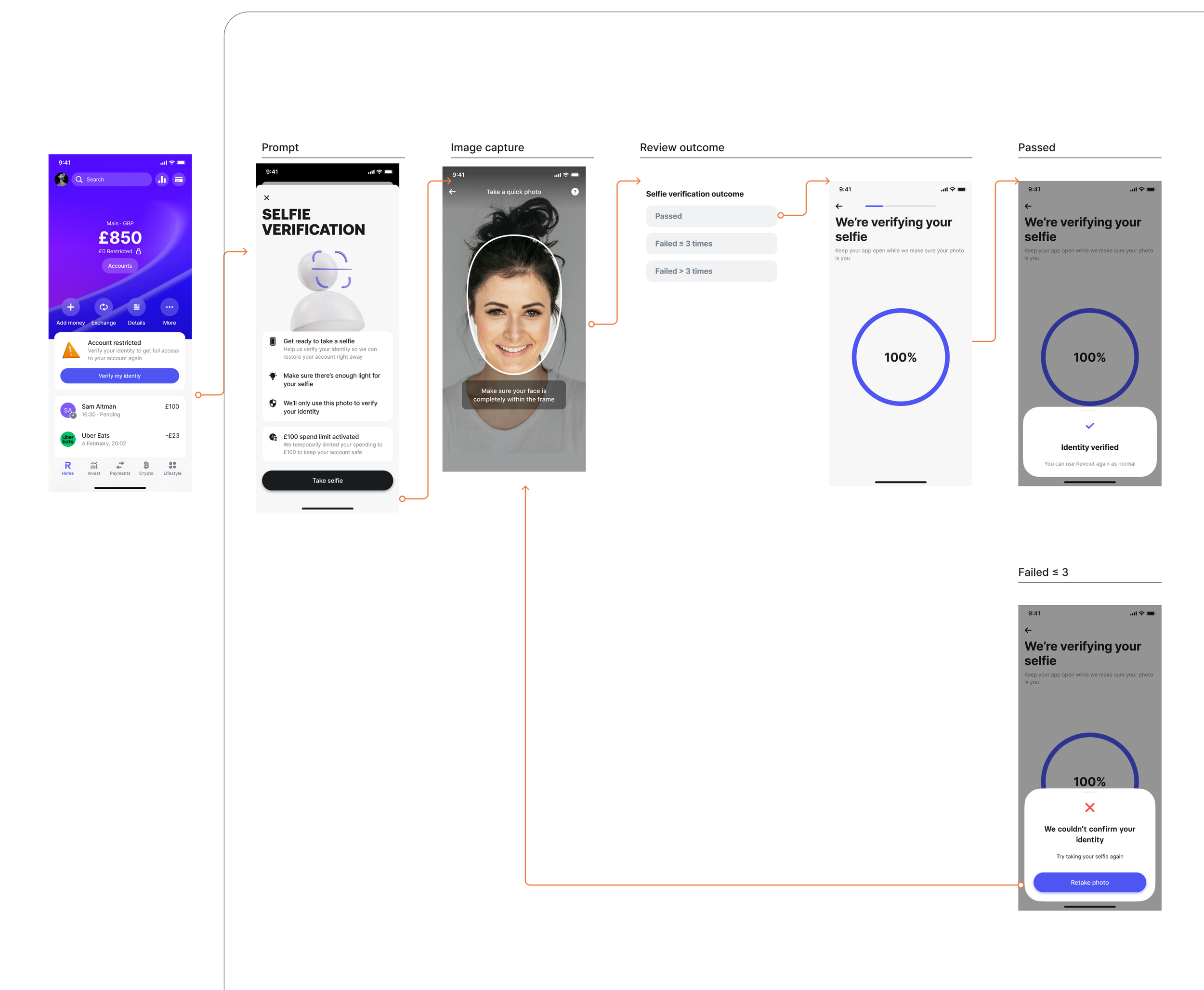
I rewrote all screen copy across the restricted account and identity verification journey. The existing content had been written primarily as a security mechanism — functional, but cold. For genuine customers, receiving a message that their account had been restricted is alarming. The rewrite prioritised explaining what was happening and why at every step, reducing the sense that the user had done something wrong while maintaining the seriousness of the verification requirement.
Email communications
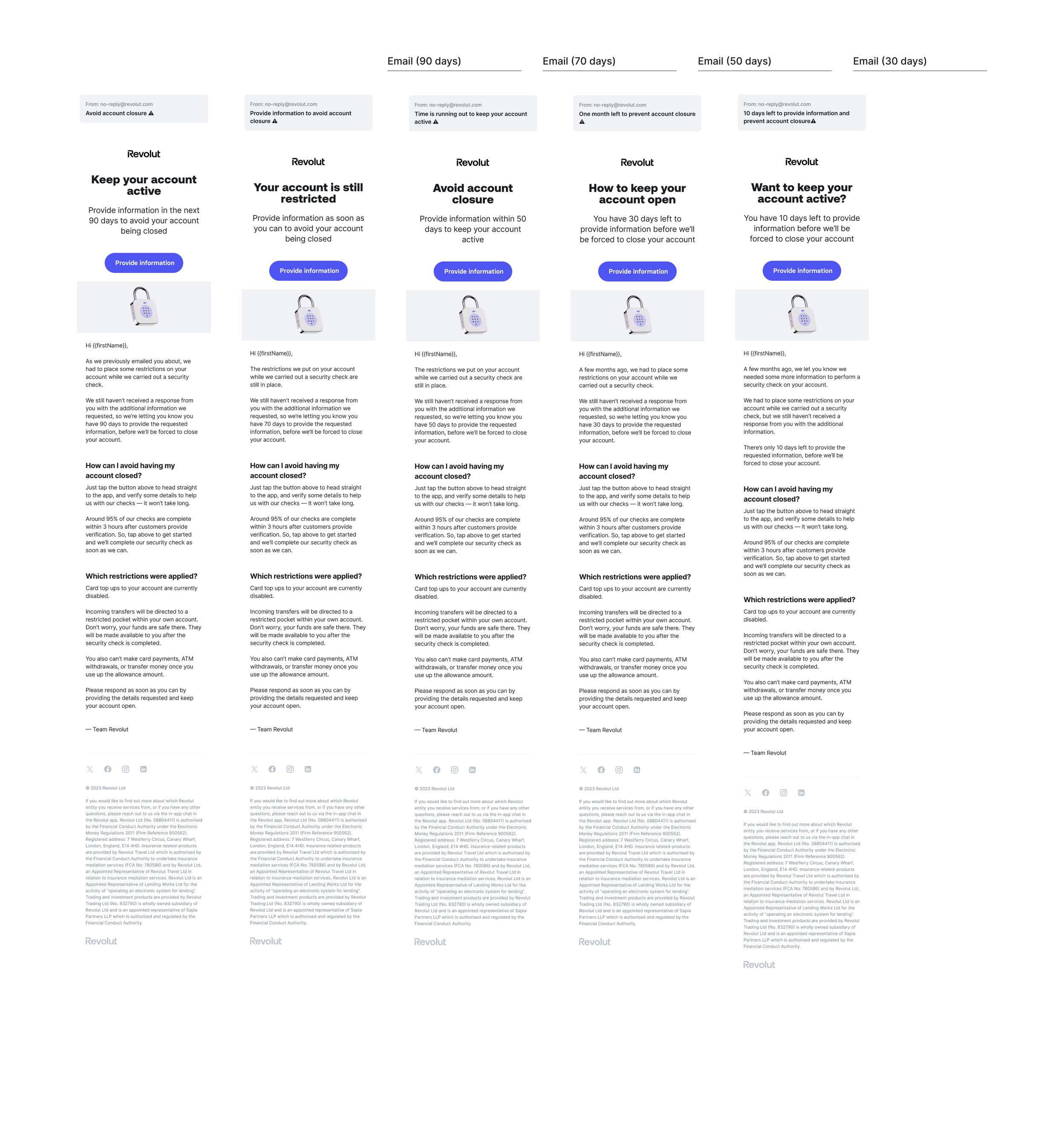
I rewrote the corresponding email copy to work consistently with the in-app experience — ensuring the tone, sequencing and information carried consistently across both channels, so customers didn't feel they were getting conflicting messages from the same brand.
Selfie verification
I also worked on the selfie verification help article, ensuring the instructions were specific enough to support genuine users through an unfamiliar process, while the framing made clear why the step was necessary.
The results
While specific metrics from this project are confidential, Revolut's fraud prevention improvements in 2024 were significant and publicly reported. Revolut's fraud prevention systems saved customers more than £600m in 2024, and an AI scam detection feature introduced during the same period saw a 30% reduction in fraud losses from card scams. The broader fraud prevention programme — of which this identity verification work was a part — represented a major strategic priority for the business that year.