Revolut is one of the world's leading fintech platforms, with over 50 million customers globally.
Boost your banking – UX research
The problem
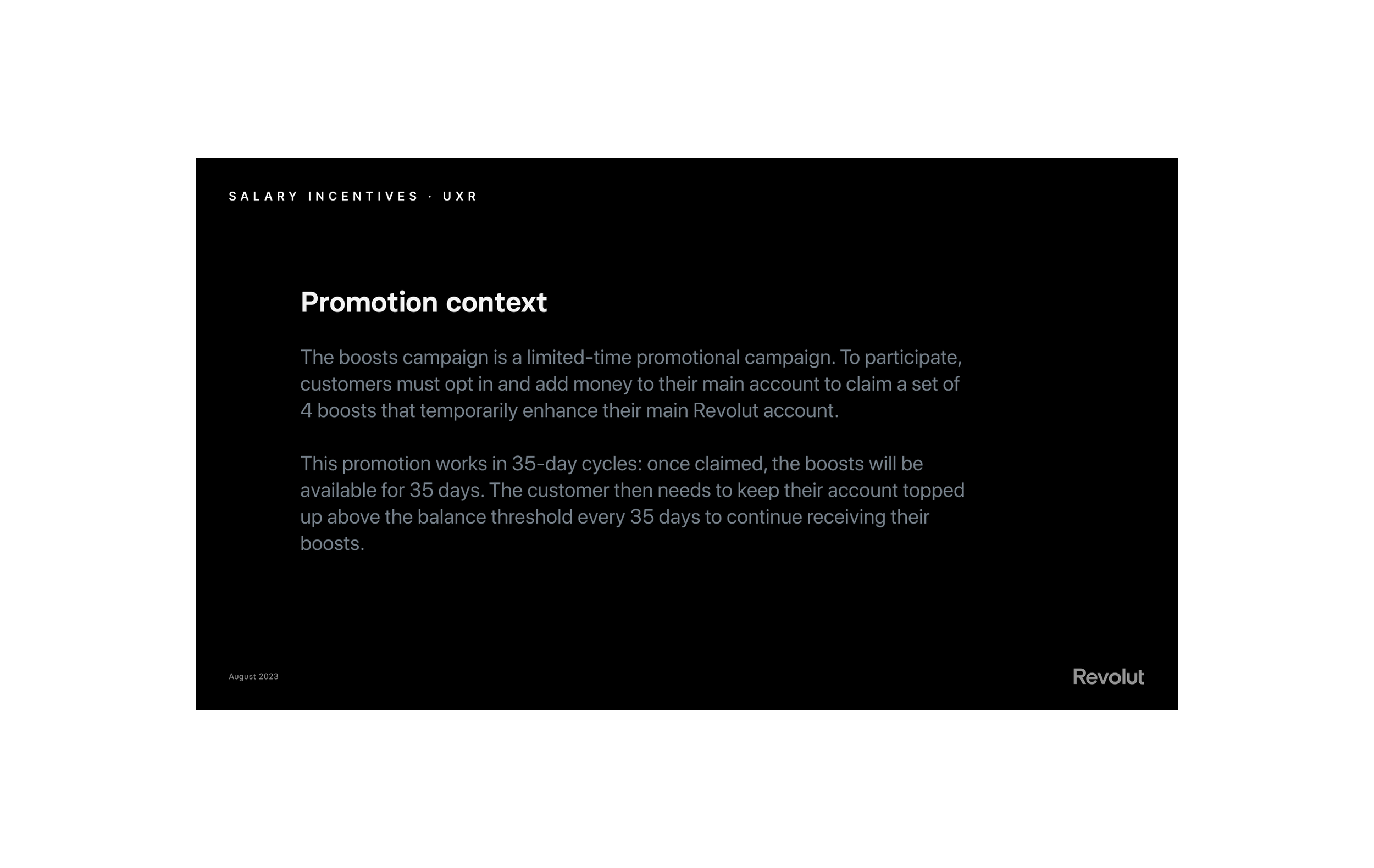
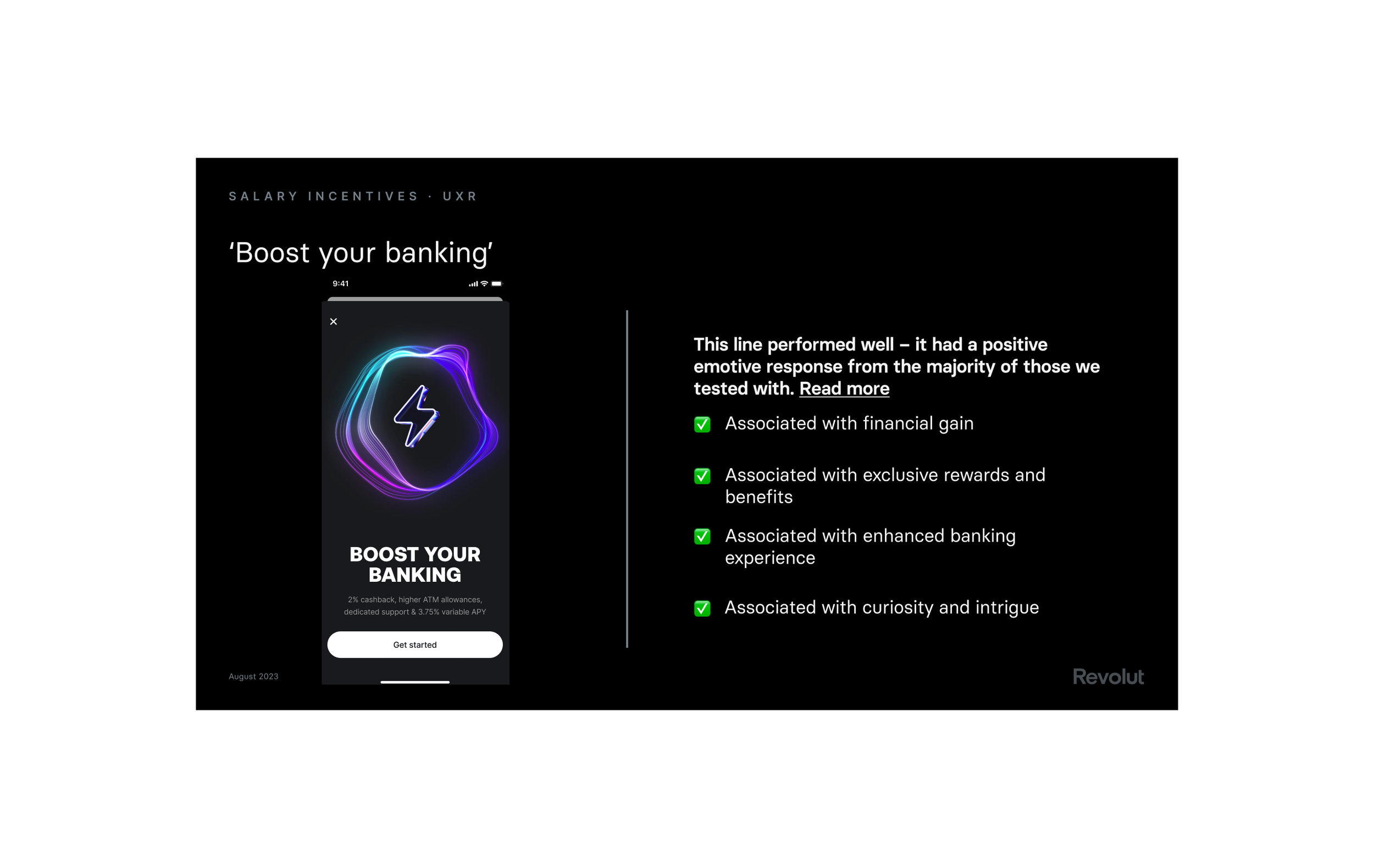
The 'Boost Your Banking' campaign was a limited-time promotion running across Ireland and Germany. To claim a set of 4 'boosts', or additional benefits, customers needed to opt in and add money to their main account.
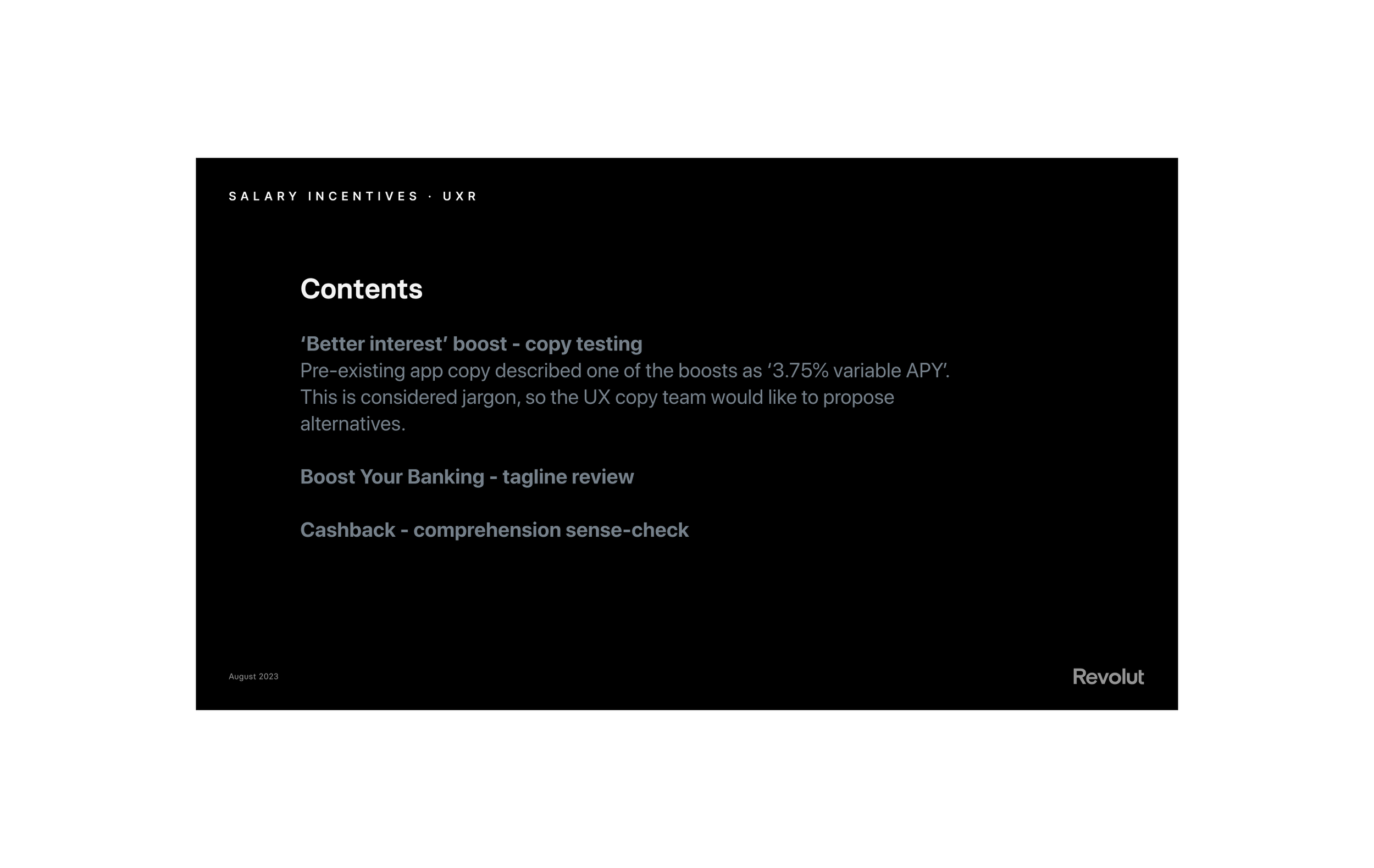
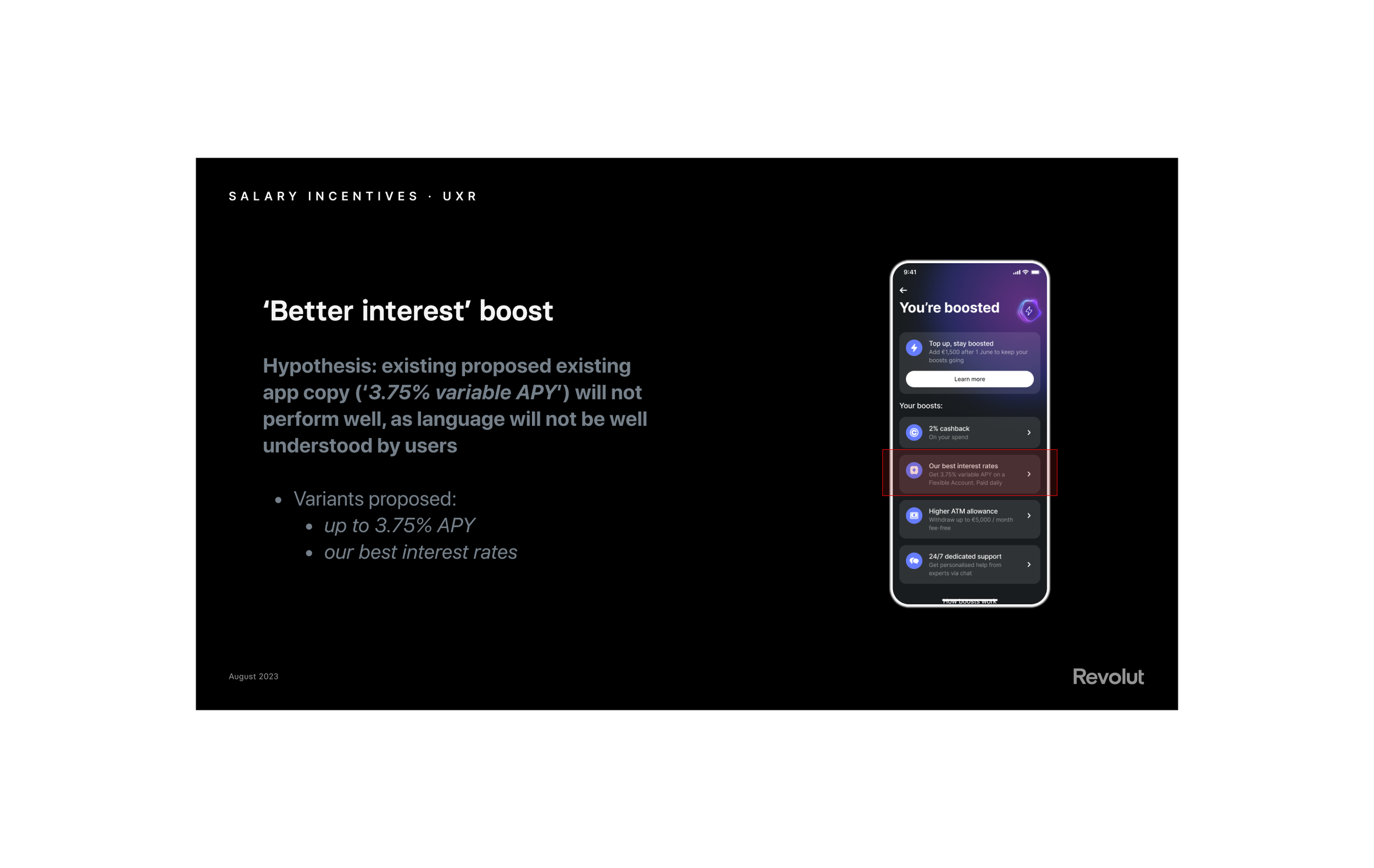
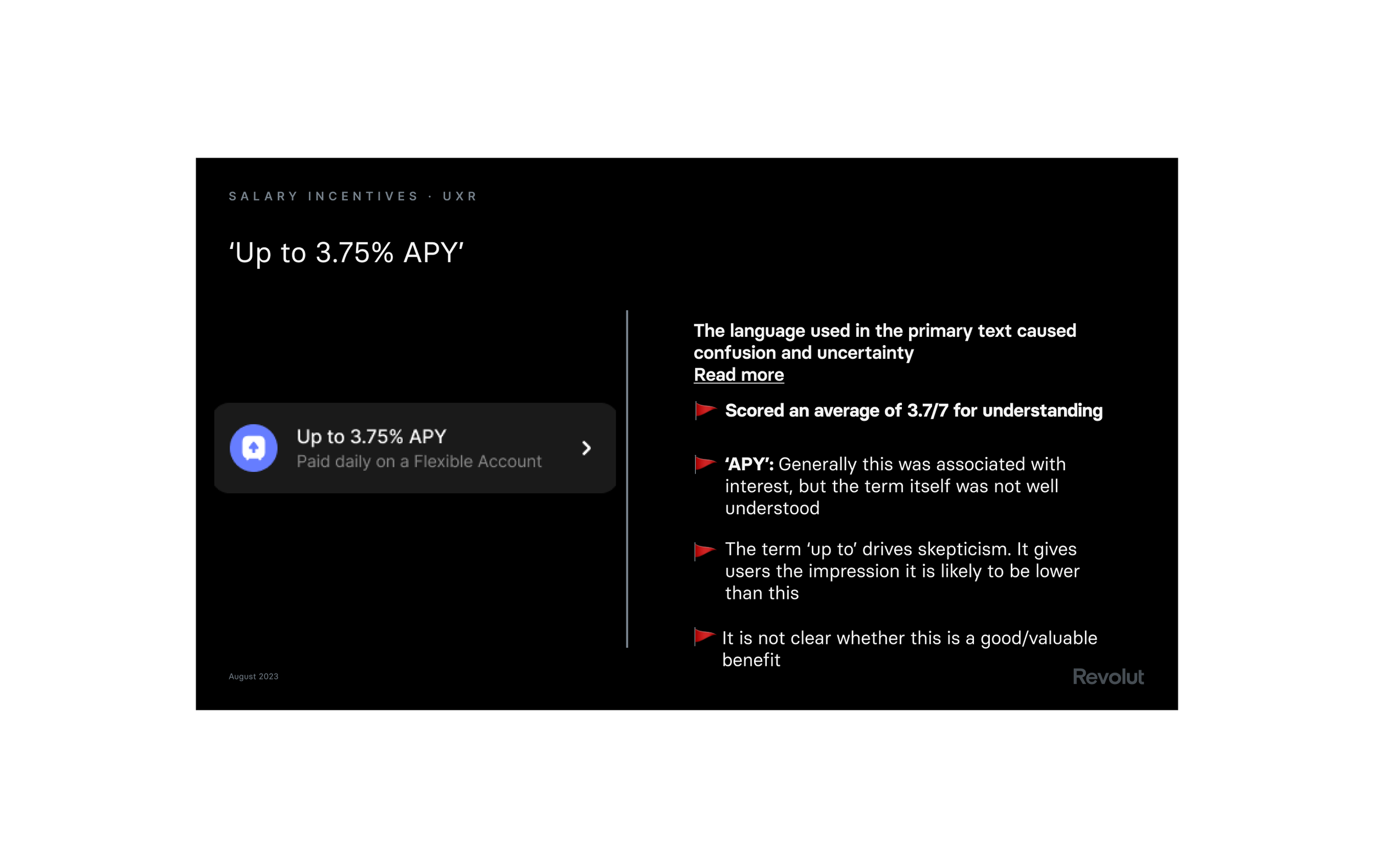
One of those boosts was a '3.75% variable APY' interest rate. In fintech, there's a tendency to use industry-standard terminology because it feels precise and compliant – but actually, the real benefit is not clear. I believed that most users wouldn't know what APY meant, let alone understand why it was important or relevant to them. This would pose a problem with conversion on the promotion.
The hypothesis
If we tested the terminology before launch, we'd have the evidence needed to either simplify the language or find a way to explain it clearly — and avoid launching a campaign built on copy users couldn't understand.
My role
Content designer and co-lead on the research, running the test in partnership with a UX researcher.
What I did
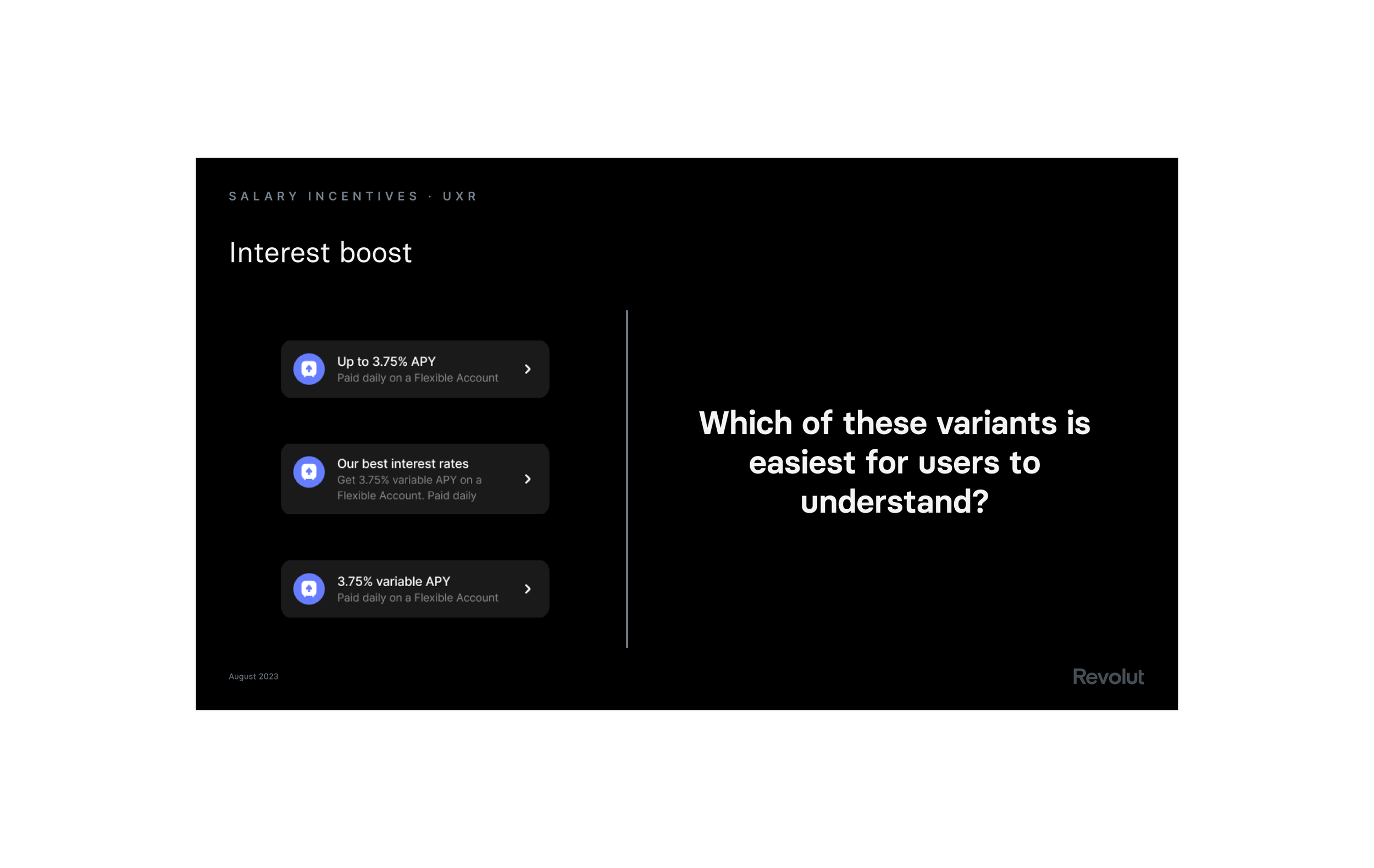
I initiated and co-ran a copy research test specifically focused on the 'APY' terminology — examining whether customers understood what it meant and how it affected their perception of the offer.
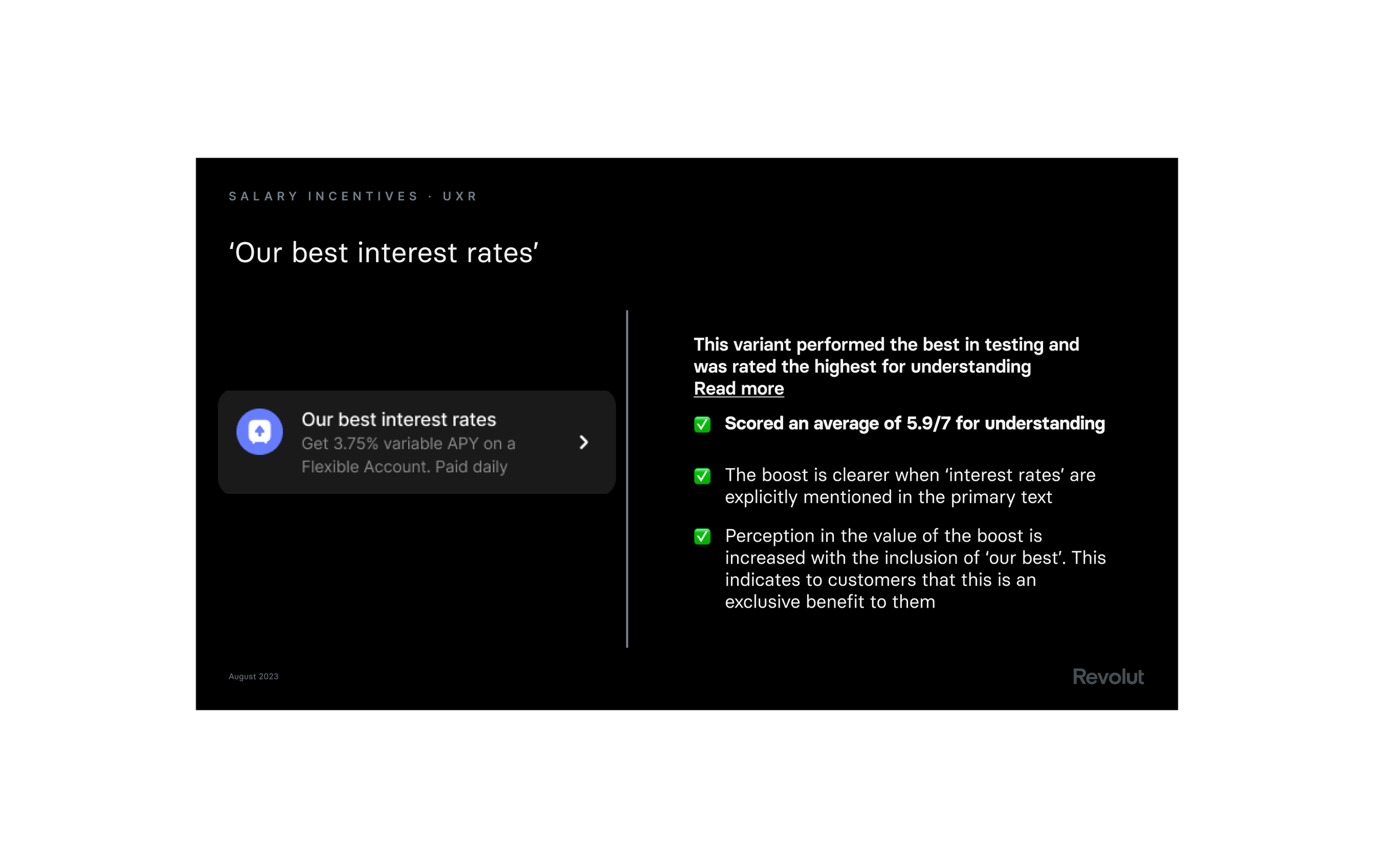
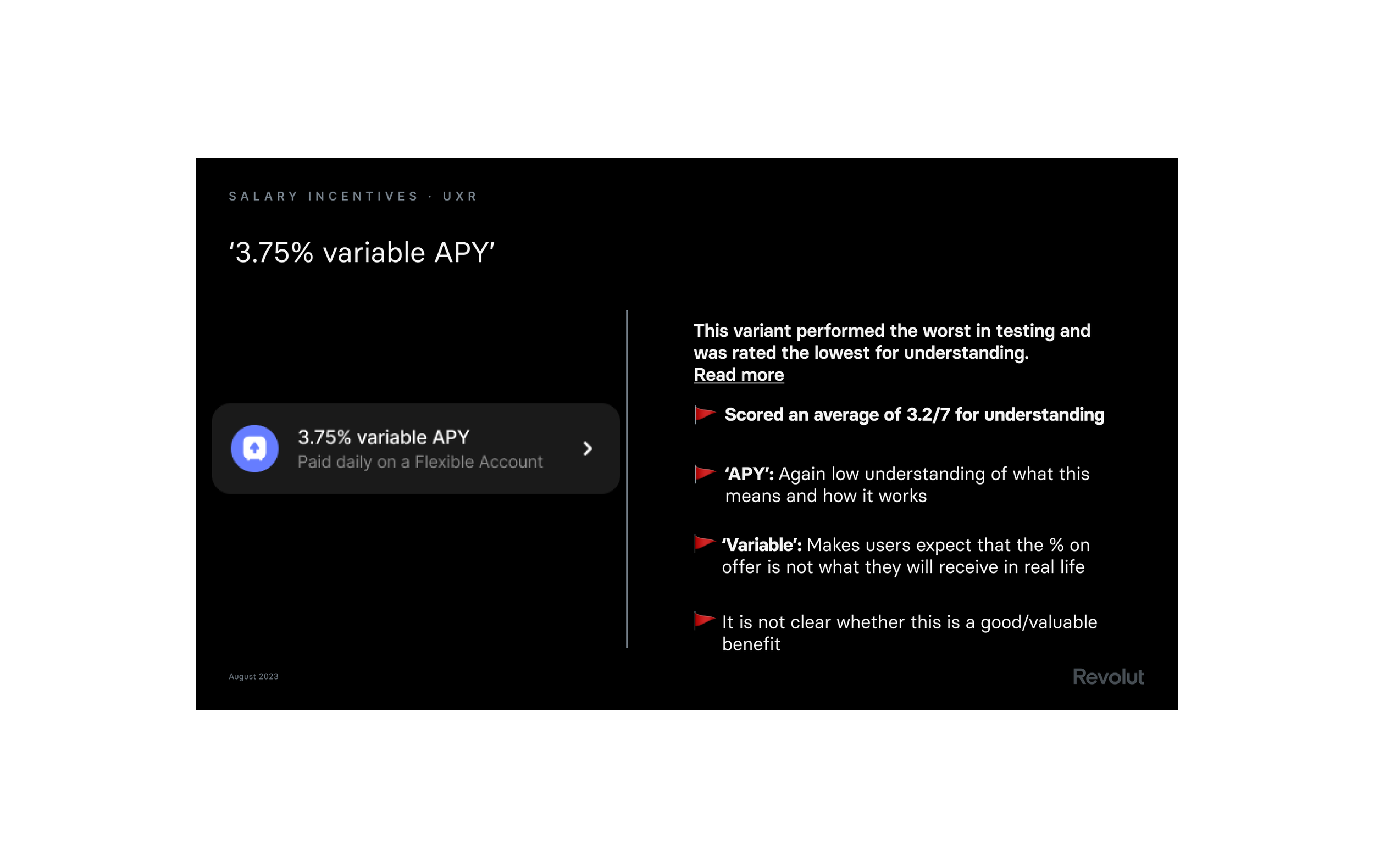
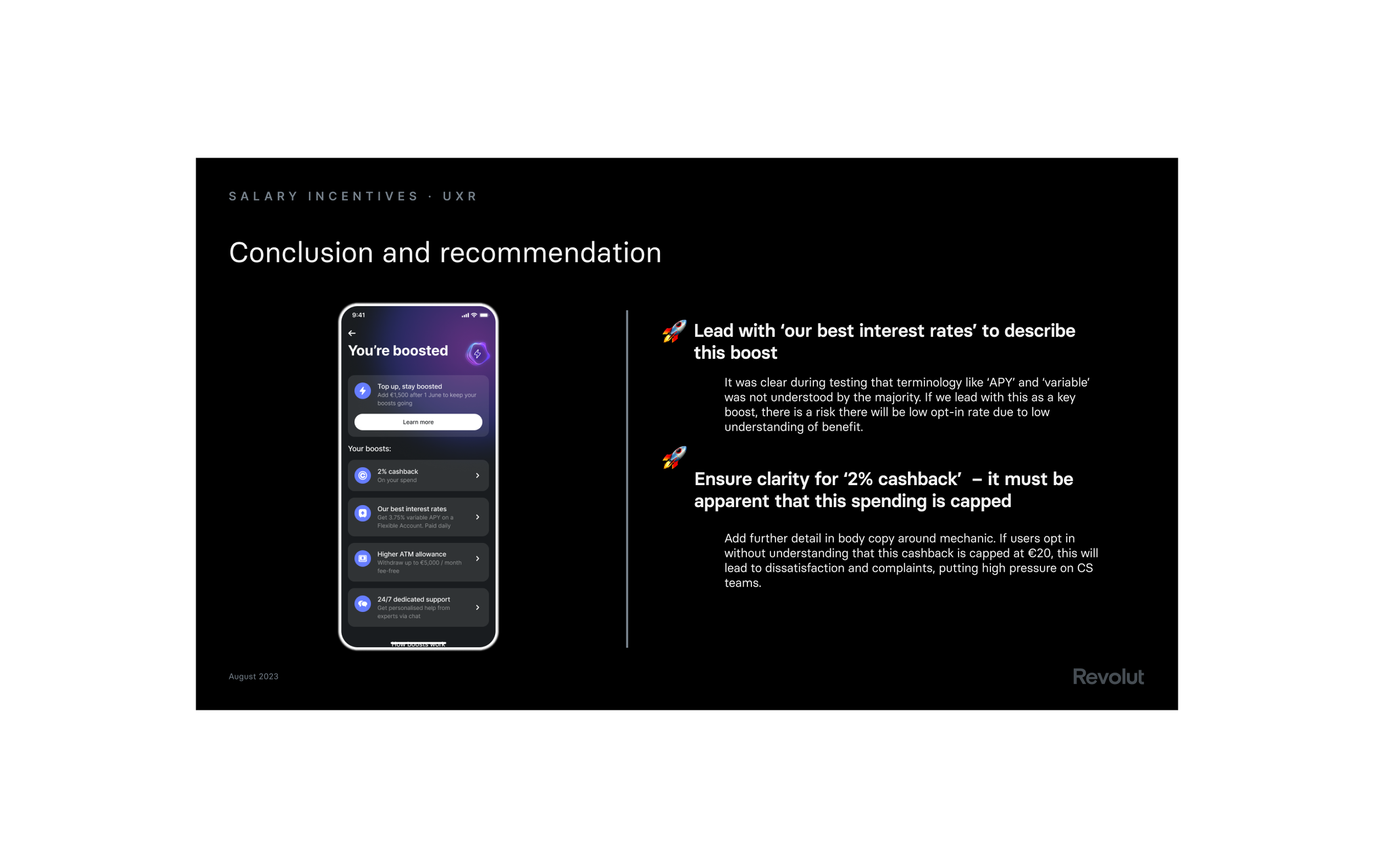
The results were clear: any copy featuring 'APY' was not fully understood by customers. The ideal solution would have been to remove the term entirely and lead with plain language. But in a regulated financial context, with senior stakeholders understandably cautious about changing established terminology on a short timeline, that wasn't on the table.
I found a workable middle ground: keeping '3.75% variable APY' in the copy for compliance and familiarity, but adding clear body copy that explained what it actually meant in plain terms. Customers would get the reassurance of a recognised term, but the explanation was there they needed it.
The result
The campaign launched with copy that balanced regulatory requirements with user comprehension. The research prevented a potentially confusing — and commercially damaging — campaign from going live without the right guardrails in place.
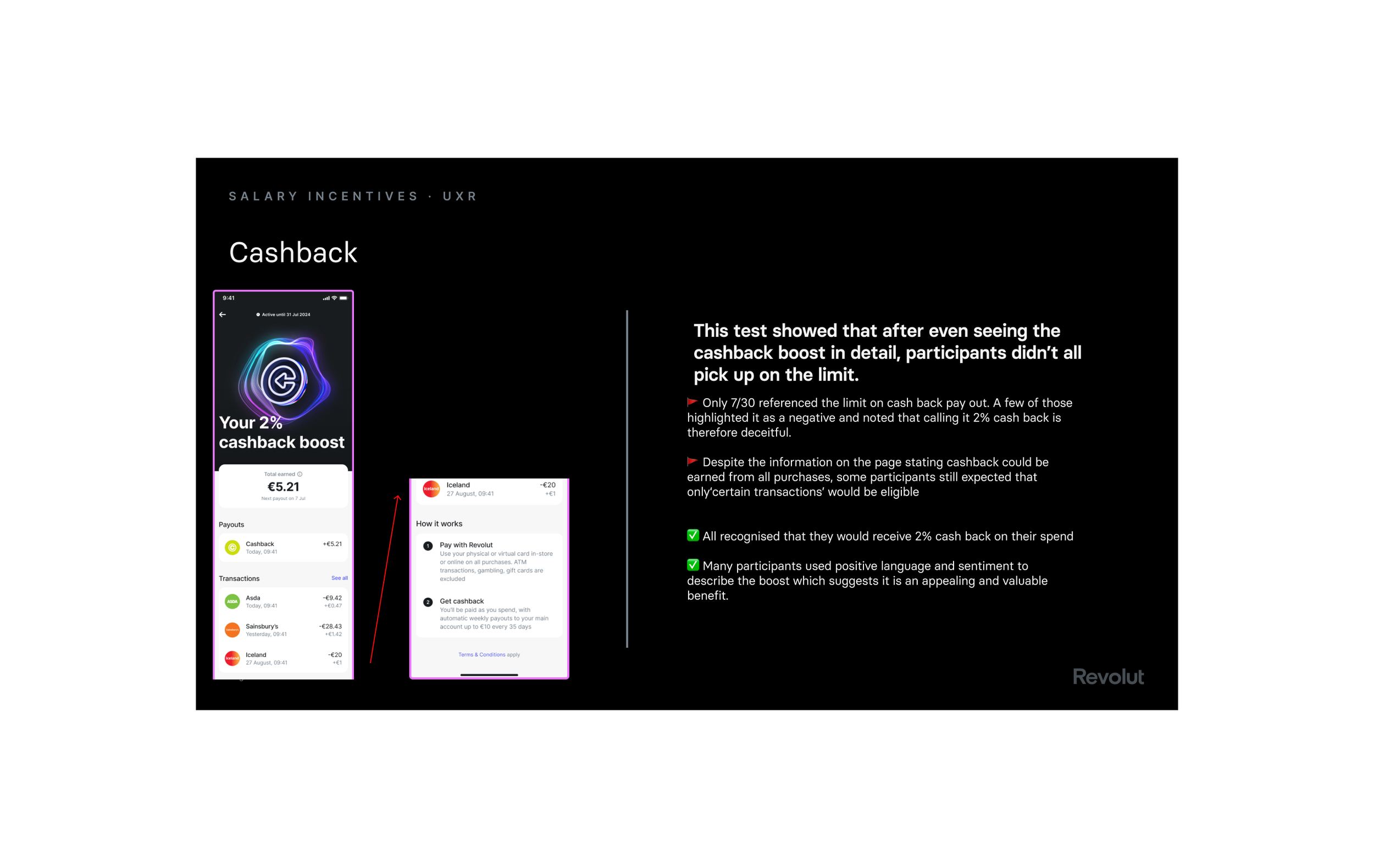
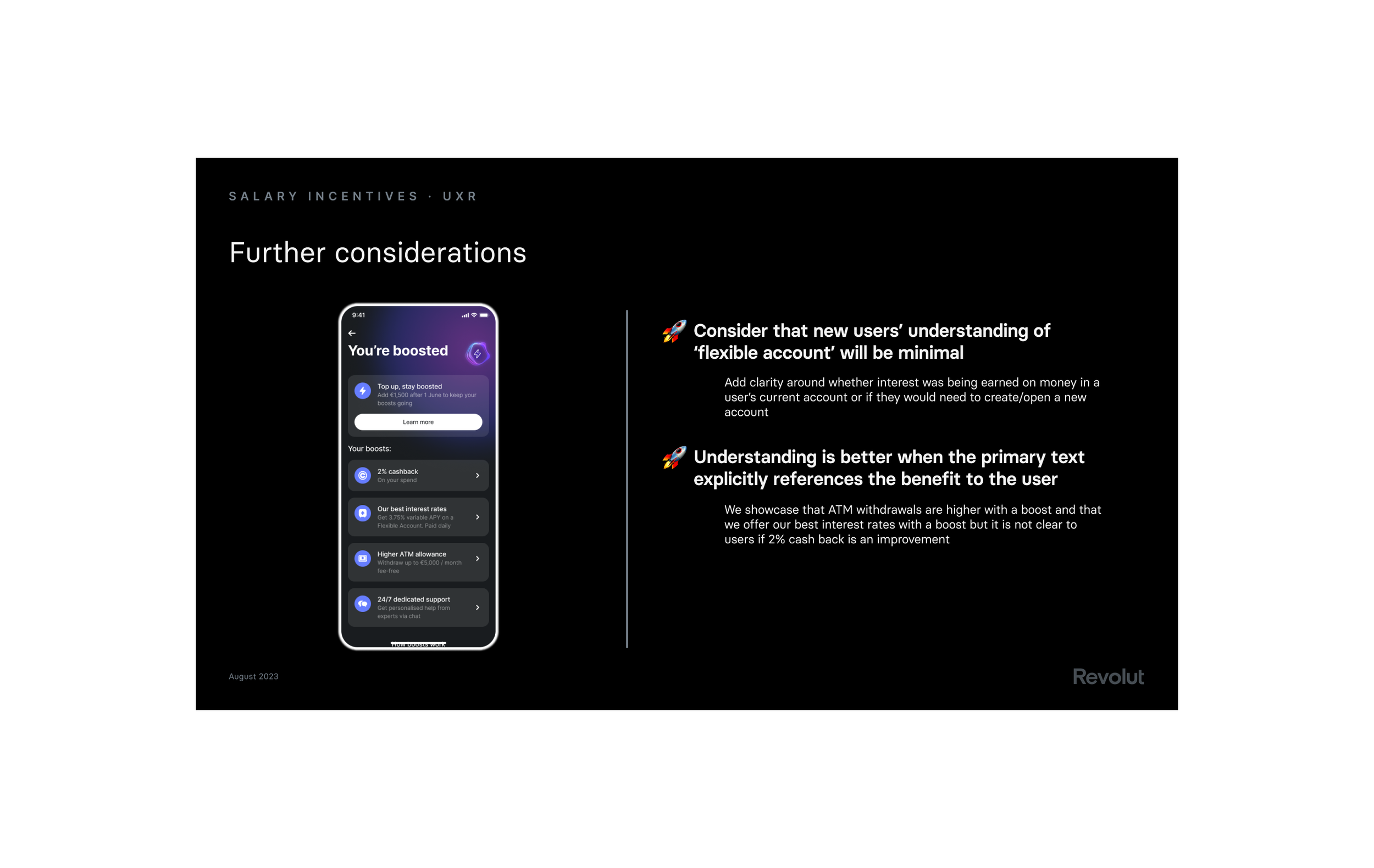
The research slides are below.